One April morning by the Ticino River, I watched a long-tailed tit building its nest. It flew back and forth between two fir trees, building on one and gathering material on the other. What it was picking at were the webs of the processionary caterpillar: the white protective coverings of a pest, dangerous for trees, people, and, not least, some animal species.
The titmouse used it nonetheless. What was protection for the pest became raw material for the titmouse. From the destroyer's web arose the warmth of the nest. Nature follows its own cycle; it transforms what others leave behind and allows much to continue living.
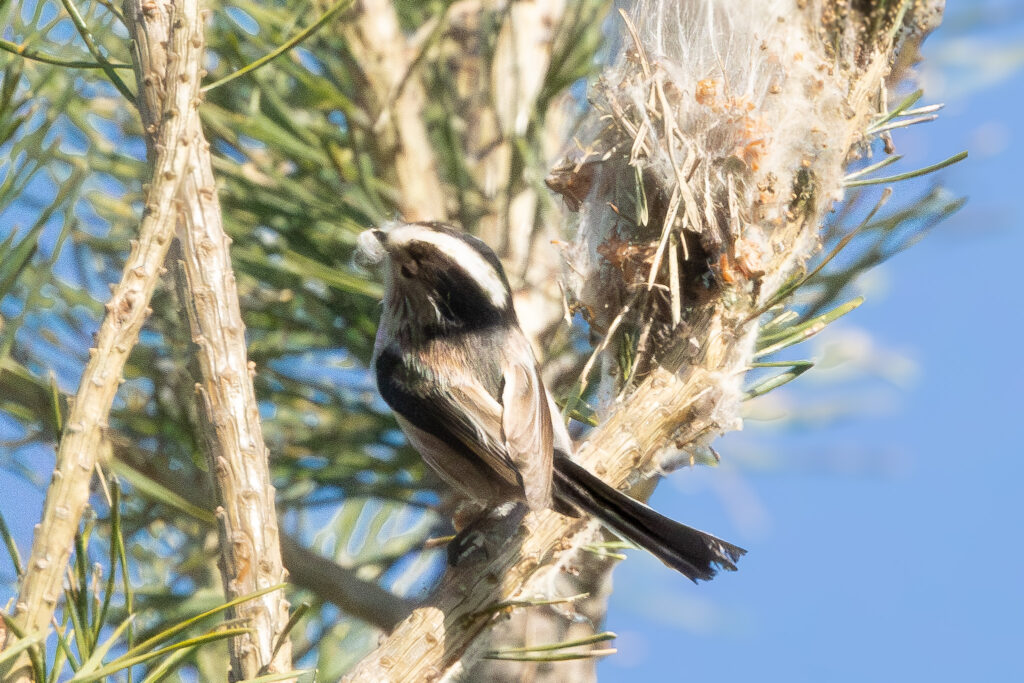
This moment made me pause. Nature knows no waste. What one organism leaves behind, another absorbs. Fallen trees become habitats for beetles, fungi, and woodpeckers. Dead animals nourish the soil. The webbing of a pest warms the nest of a titmouse. Everything flows on. Nothing simply ends.
We humans are often less than careful with what we have. In many parts of the world, entire regions are drowning in trash, flooded with what we have produced, used, and thrown away. The oceans carry it further, washing it up on beaches and endangering us and a natural world that could actually regulate itself. Clothes we've never worn fill containers. Devices that still work end up in landfills because a new model has come out. And often we do this not out of necessity, but to be visible. The newest, the fastest, the shiniest—not because it makes us better, but because it shows who we want to be.
Nature doesn't prove itself. It lives simply, sparingly, precisely. It doesn't ask what's new. It asks what's already there and who might need it.
The long-tailed tit simply built its nest. But in this silent back and forth between two fir trees lay a question that wouldn't let me go:
What would change if we looked more often at what we already have before we needed something new?